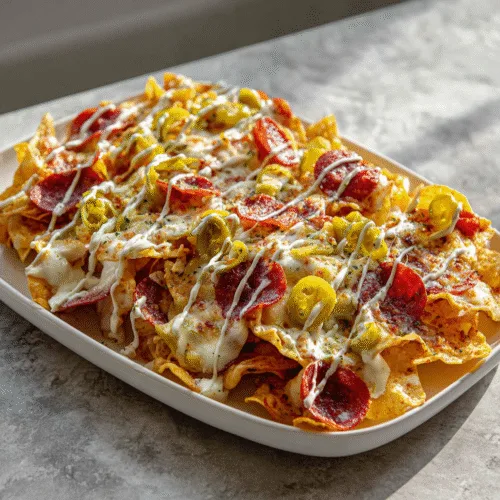
Texture often separates a good appetizer from a truly memorable one, and Old Chicago Nachos succeed precisely because of their carefully considered textural contrast. Understanding how to preserve and enhance this contrast ensures your tray delivers satisfying crunch and creaminess consistently throughout.
Why Texture Matters So Much in This Dish
A dish built entirely around soft, creamy elements would quickly become monotonous, which is exactly why the crispy pasta chip base plays such a critical role. This foundational crunch provides necessary contrast against melted cheese and savory toppings layered generously on top throughout the tray.
Preserving Crunch Throughout Baking
Choosing pasta chips or baked wonton wrappers over traditional tortilla chips already helps preserve crunch, but proper technique matters too. Avoiding overly thick sauce layers and not overbaking the tray both contribute significantly toward maintaining that satisfying crispness from edge to edge.
Layering for Textural Variety
Distributing toppings like olives and banana peppers evenly adds small pockets of additional crunch and freshness throughout the dish. Rather than clustering these ingredients together, spreading them across the tray ensures every bite includes a mix of textures rather than feeling repetitive or predictable.
The Role of Cheese in Textural Balance
Mozzarella provides that classic stretchy, gooey quality when melted, while Parmesan adds slight crispiness, particularly around the edges where it browns during baking. This combination creates layered textural interest beyond simply crunchy versus soft, adding another dimension to each individual bite.
Here is a quick summary of textural elements at play:
- Crispy pasta chips forming the crunchy foundation
- Gooey mozzarella providing creamy, stretchy texture
- Slightly crisp Parmesan edges adding contrast
- Crunchy olives and banana peppers scattered throughout
For the complete recipe demonstrating this textural balance in action, the Old Chicago Nachos page provides detailed guidance worth following closely.
Avoiding Common Textural Mistakes
Overloading the tray with too much sauce risks overwhelming the crispy base entirely, turning the dish soggy rather than balanced. Similarly, underbaking leaves cheese underdeveloped and toppings cold, while overbaking dries everything out excessively, so careful attention during the final baking minutes matters considerably.
Final Thoughts on Textural Success
Mastering texture transforms this dish from simply tasty into something genuinely satisfying on a sensory level. By paying close attention to ingredient choice, layering technique, and baking time, you can consistently achieve that ideal balance of crunch and creaminess guests remember long after the tray is empty.